
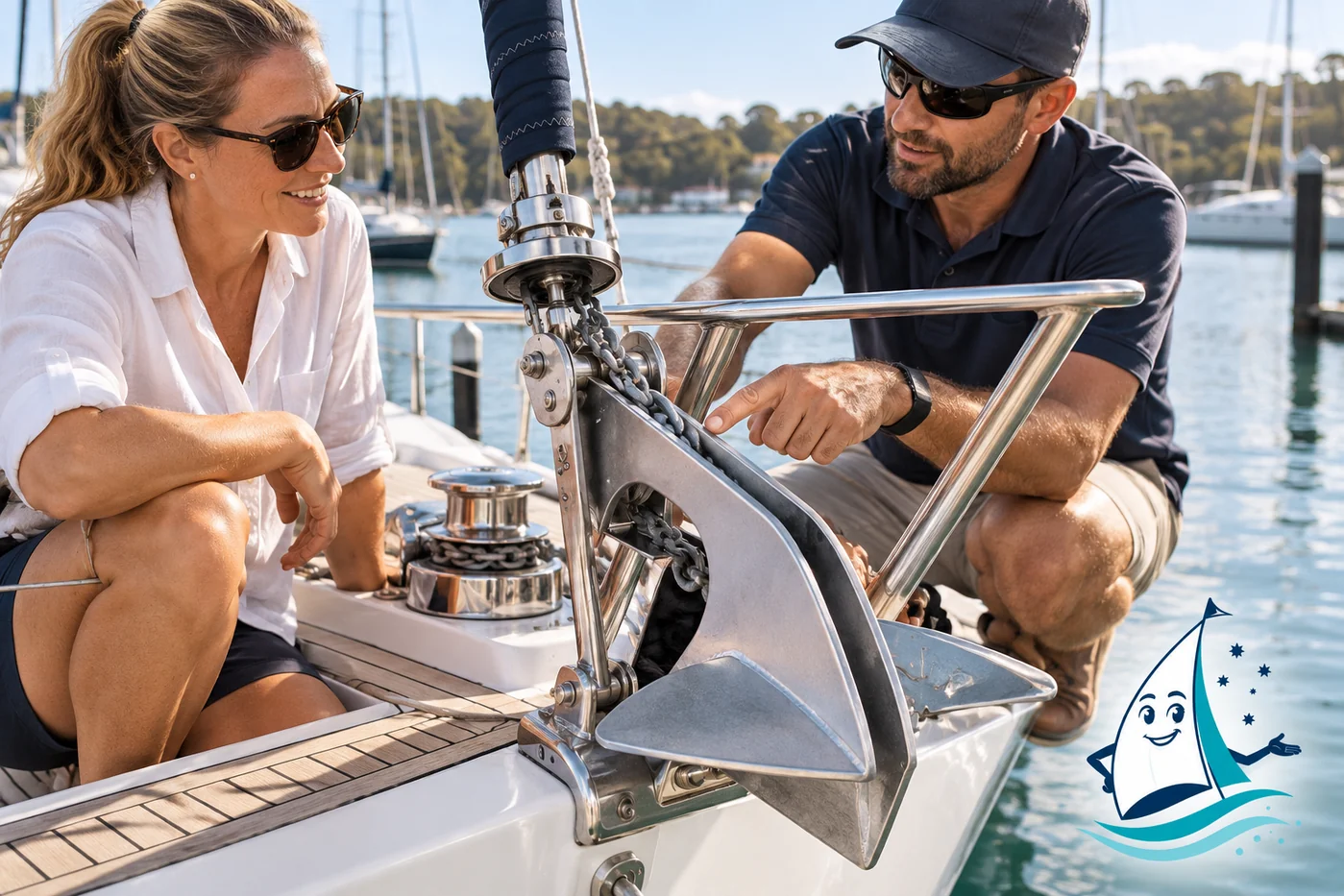
1. Define the need before the product
Record loaded yacht dimensions and displacement, expected anchorages, current anchor and rode, windlass details and the crew’s practical handling concerns. Use the proposed anchor maker’s guidance and get the whole arrangement assessed rather than selecting by anchor weight alone.
2. Compare the credible options
Compare maintaining sound equipment, replacing an unsuitable component and redesigning the complete bow setup. Consider the primary and backup arrangements, storage and retrieval. A larger anchor can introduce fit and handling questions elsewhere.
3. Check the complete installation
- Confirm anchor fit on the bow roller and clearances through launch and retrieval.
- Match chain specification to the windlass gypsy, not just a nominal chain diameter.
- Assess bow fittings, mounting, load paths, locker capacity and access.
- Include the windlass electrical installation and a practical manual fallback in the review.
4. What the all-in quote should cover
Compare written Australian dollar quotes for the same scope. Ask whether GST is included, how long pricing is valid and what remains an estimate.
- Anchor, specified rode and compatible connecting components.
- Windlass or gypsy changes, bow roller or structural work where required.
- Electrical work, installation, testing and crew demonstration.
Equipment-only pricing is not an installed-cost estimate. Record unknown costs separately and agree approval for variations before work proceeds.
5. Check the handover, not just the invoice
Agree the acceptance and commissioning evidence before work starts. Use the installer’s appropriate test procedure; this is an owner’s handover checklist, not instructions to perform technical tests yourself.
- Demonstrate controlled launch, retrieval and stowage in suitable conditions.
- Confirm component specifications and secure installation.
- Learn the equipment’s operating limits and manual arrangements from the installer.
6. Budget for ongoing ownership
Inspect and maintain components according to their manufacturers. Keep the specification record so replacement chain or fittings are correctly matched later.
Common buying mistakes
Do not treat the windlass as proof that the whole bow arrangement is suitable. A catalogue anchor size does not answer chain compatibility, structural or stowage questions.
WORKED PLANNING EXAMPLE
Illustrative decision: an owner chooses an anchor from the manufacturer’s guide, then checks a full-size template on the roller before purchasing. The fit review prevents an otherwise expensive mismatch.
THE OWNER’S FIELD GUIDE
Work through the decision in detail
Use these discussions before requesting a quote. Bring the yacht’s records, your survey findings and a clear description of the trips you want to make.
OWNER’S FIELD GUIDE · 01
Define the yacht and the places you intend to anchor
Give the specialist the yacht’s loaded cruising particulars and your intended use, including the types of trips and anchorages you expect. Explain existing difficulties: setting, retrieval, stowage, handling or a lack of confidence in unfamiliar conditions. Keep equipment selection separate from developing anchoring judgement and technique.
Ask the supplier to explain the selection method for the proposed anchor and associated equipment. Do not choose solely by copying another yacht’s anchor or scaling a photograph. The recommendation should be specific enough that you understand its assumptions and know when a changed cruising plan deserves another review.
OWNER’S FIELD GUIDE · 02
Assess the complete load path and handling arrangement
Have the bow roller, securing arrangement, chain or rode, windlass and relevant supporting structure reviewed together. Ask which components need specialist assessment and which existing parts are proposed for retention. A new anchor is only one element in the system.
Confirm how the anchor will fit, deploy and stow without damaging the yacht or obstructing other equipment. Use a supplier’s appropriate template or a professional fit check where available. Include the way the anchor is secured for passage; do not judge suitability only from how it hangs while the yacht is stationary at a berth.
OWNER’S FIELD GUIDE · 03
Check rode and windlass compatibility
Ask the installer to verify the exact compatibility of chain and windlass components and the condition of retained equipment. Similar-looking chain is not a sufficient specification. Record what is installed so future replacement orders can be checked against the actual system.
If the windlass is being changed, include electrical supply, controls, mounting, access and any structural work in the quote. Ask for the manufacturer’s operating limitations and the yacht-specific arrangement to be explained at handover. This guide is not a load-calculation or installation procedure.
OWNER’S FIELD GUIDE · 04
Make the bow workable for your regular crew
Walk through how the crew communicates, observes the anchor and operates the controls. Discuss visibility, footing, access to lockers and the space occupied by furlers, bowsprits or tenders. A powerful mechanism does not remove the need for a practical crew routine.
Ask an appropriate professional or instructor to help you develop and practise the operation where necessary. Clarify what to do if normal retrieval is unavailable, using the documented procedure for your equipment. Avoid discovering that the backup method is inaccessible after the new installation is finished.
OWNER’S FIELD GUIDE · 05
Compare the whole purchase and the continuing costs
Request a scope covering equipment, compatible connecting components, installation, any bow or locker alterations, electrical work and commissioning. Ask whether freight and disposal or storage of the old equipment are included. Heavy components can create additional delivery and handling costs.
Record inspection and servicing requirements and keep identification details with the yacht. If the upgrade adds weight or changes its location significantly, raise that with the relevant specialist. Evaluate the project as a change to the working yacht rather than an isolated purchase at a chandlery.
OWNER’S FIELD GUIDE · 06
Prove fit and function before relying on the upgrade
Arrange an appropriate professional demonstration of deployment, retrieval and secure stowage. Have the regular crew take part and obtain the equipment’s operating and maintenance instructions. Record any limitations or follow-up work before the first trip.
Build experience in suitable conditions and develop a location-specific anchoring plan for each stop. Better equipment does not make every anchorage suitable or remove the need to monitor conditions. Review your process with an instructor if confidence and technique remain the main concern after the hardware work.
MAKE A SHORTLIST
Which scope fits your yacht?
Ask the relevant specialist which of these routes is credible for your yacht. Compare the whole result, including the parts you would retain.
PAUSE AND ASK FOR EVIDENCE
Red flags in the upgrade proposal
These are reasons to clarify the scope or seek specialist assessment. They do not establish that a particular product or contractor is unsuitable.
An anchor is ordered without checking stowage
A selection may suit the brief but fail to fit the bow arrangement cleanly.
Your next step: Arrange a professional fit check and confirm deployment, retrieval and secure passage stowage.
Chain is specified only by a rough size description
The exact compatibility of chain and windlass components matters.
Your next step: Have the installer identify and verify the component specifications before purchasing replacements.
The windlass quote ignores the supporting installation
Electrical supply, controls, structure and access can affect the whole project.
Your next step: Ask for an integrated scope and a clear boundary around retained equipment.
Hardware is promised as a cure for all anchoring anxiety
Technique, judgement, location and crew communication remain part of the task.
Your next step: Combine an equipment assessment with suitable practical instruction where confidence is the limiting issue.
ILLUSTRATIVE OWNER SCENARIO
How the decision changes in practice
An owner orders a well-regarded anchor but a fit check shows that it does not stow cleanly on the current roller. Instead of modifying the bow informally, they compare a compatible anchor option with a properly designed roller alteration. The final decision includes chain compatibility, secure stowage and a crew demonstration. The result is evaluated as a complete anchoring arrangement.
A fictional planning example, not a report about a particular yacht, owner or contractor.
6 QUESTIONS FOR THIS TOPIC
Anchor, chain, windlass & bow fittings: FAQs
Is a heavier anchor always better?
Ask the supplier to apply the relevant selection method and assess the entire arrangement. Fit, handling and compatibility matter alongside the selected anchor’s characteristics.
Can I reuse my chain?
Have its specification and condition checked and confirm compatibility with retained or new equipment. Do not judge it only by appearance.
Will a windlass upgrade solve difficult anchoring?
It may address one equipment limitation. Review the complete installation, crew routine and technique before assuming it solves every problem.
Who should inspect the supporting structure?
Ask your surveyor or installer which specialist assessment is appropriate to the proposed change and the yacht’s construction. Define that responsibility before work starts.
How should I plan an anchoring upgrade around short-handed sailing?
Explain who normally handles the bow and helm and where communication or access becomes difficult. Review equipment and crew routine together with an appropriate professional. Include a practical demonstration of the final arrangement, not only a check that the windlass operates.
What should I record when replacing chain or connecting components?
Keep the exact specifications, supplier details and the installer’s compatibility confirmation with the yacht records. Record the work and retained items. A future replacement should be checked against that information rather than ordered from a photograph or rough measurement.
Manufacturer reference
Rocna: anchor sizing guidance ↗
Consult the current manual for the exact chosen model. This reference illustrates the planning issues; it is not a brand endorsement or confirmation of Australian compliance. Research checked 6 October 2026.
YOUR INSTALLER BRIEF
Prepare your anchor, chain, windlass & bow fittings enquiry
Saved only in this browser. Print a copy before clearing browser data. These notes stay with this equipment guide on this device; nothing is sent to a contractor.