
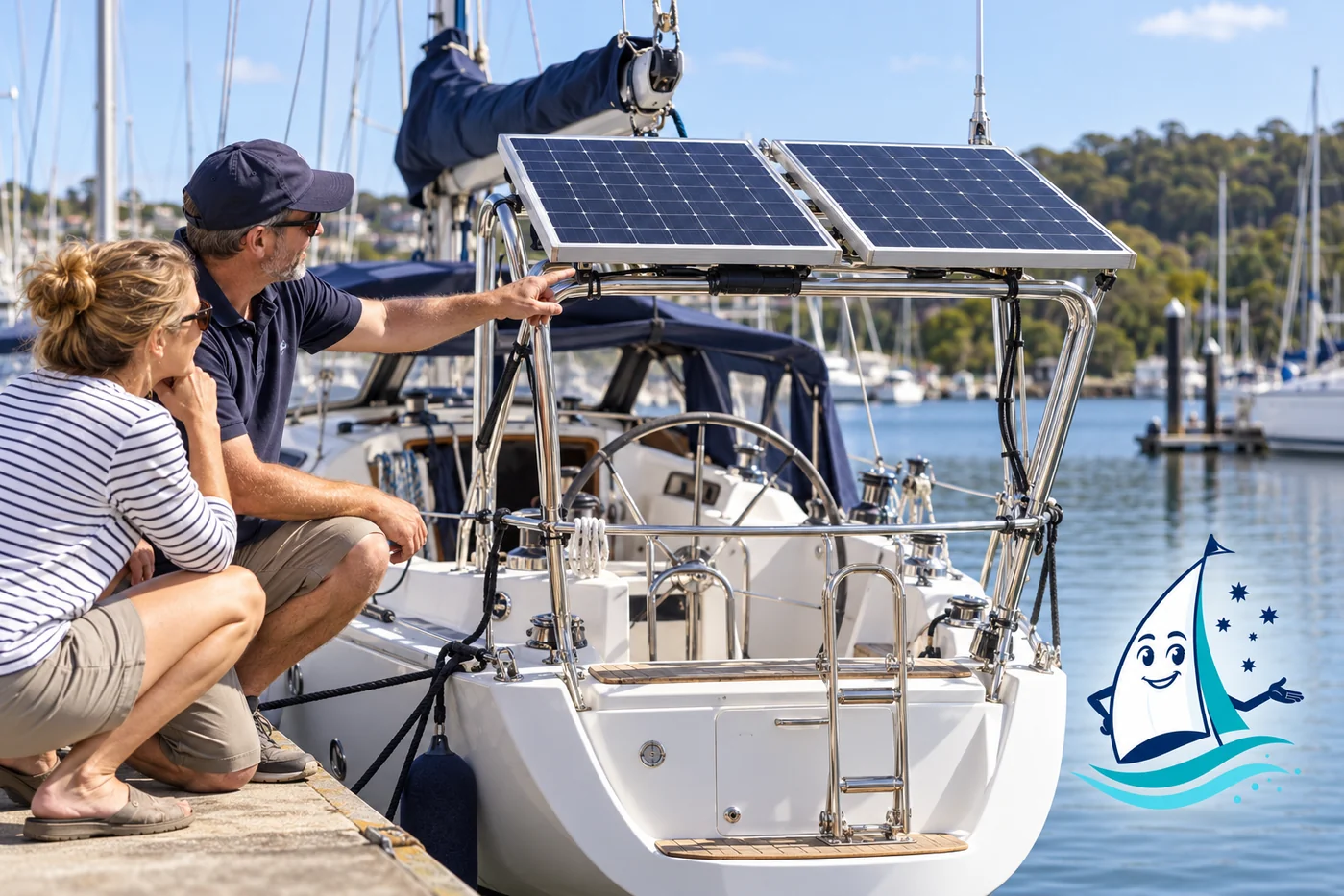
1. Define the need before the product
Make a day-at-anchor and a passage load list. Record the space available for panels, regular shading, current chargers and existing battery design. Ask what generation can reasonably be expected for your cruising pattern, including cloudy days, rather than sizing from panel labels alone.
2. Compare the credible options
Compare reducing consumption, improving the current charging installation and adding solar. Separate panel choice from controller and mounting choice. If considering wind generation or a larger alternator, compare the noise, space, maintenance and actual operating opportunities as well as output.
3. Check the complete installation
- Check panel locations against boom and sail movement, access, visibility and deck work.
- Have mounting loads, cable routes, weather exposure and service access assessed.
- Confirm controller and charging compatibility with the specific battery and BMS design.
- Document how all charging sources operate together and where each can be isolated.
4. What the all-in quote should cover
Compare written Australian dollar quotes for the same scope. Ask whether GST is included, how long pricing is valid and what remains an estimate.
- Panels, controller, mounting frame or attachment work and cabling.
- Protection, isolation, installation labour and any system-monitoring changes.
- Commissioning, drawings and future access for replacement.
Equipment-only pricing is not an installed-cost estimate. Record unknown costs separately and agree approval for variations before work proceeds.
5. Check the handover, not just the invoice
Agree the acceptance and commissioning evidence before work starts. Use the installer’s appropriate test procedure; this is an owner’s handover checklist, not instructions to perform technical tests yourself.
- Ask for observed charging measurements and the conditions during the test.
- Check labels, monitoring and isolation demonstrations.
- Record agreed settings and verify that the installed system matches the drawings.
6. Budget for ongoing ownership
Inspect and maintain the installation as instructed by the manufacturers. Review actual generation across your normal trips before buying more storage. Include shading changes and new electrical loads in later reviews.
Common buying mistakes
An advertised panel wattage is not a daily energy guarantee. More panels do not resolve an incompatible charging setup. A large arch should be assessed as a structural and practical change, not just a place to attach equipment.
WORKED PLANNING EXAMPLE
Illustrative decision: a crew plans more battery capacity after short charging days. Their monitoring instead shows a recurring charging deficit. They compare load reduction and charging improvements before deciding whether more storage would help.
THE OWNER’S FIELD GUIDE
Work through the decision in detail
Use these discussions before requesting a quote. Bring the yacht’s records, your survey findings and a clear description of the trips you want to make.
OWNER’S FIELD GUIDE · 01
Start with an energy diary, not an empty patch of deck
Record what the yacht actually uses during a normal day and an overnight stop. Separate the refrigerator, lighting, instruments, communications and occasional appliance use. A marina weekend with shore power can conceal the demand that becomes obvious during a week at anchor. Give your installer this diary, the existing battery information and your planned cruising pattern.
Write down what success means: maintaining an unattended yacht, slowing battery discharge during weekends, or supporting longer periods away from a marina. These are different briefs. Ask for expected useful charging under stated conditions and a fallback plan for poor weather. A panel’s label is not a promise of the energy your yacht will receive every day.
OWNER’S FIELD GUIDE · 02
Map the shade throughout a sailing day
Photograph candidate locations with the boom in different positions and with the normal canvas, aerials and equipment in place. Note the areas crew walk on, where lines run and where spray or water collects. Ask the designer how shade across the proposed arrangement affects the chosen panels and controllers. The answer should relate to your actual layout.
A stern frame may offer more space but can change boarding access, the way a tender is handled, and the loads carried by existing fittings. A deck position may reduce structure but introduce different access and wear concerns. Have the mounting arrangement assessed as part of the project rather than buying panels first and improvising the support later.
OWNER’S FIELD GUIDE · 03
Plan the charging system as a whole
Provide the installer with the battery model, existing chargers, alternator arrangements, monitor and any future lithium plans. Ask who is responsible for selecting compatible controllers and settings, protecting the circuits and documenting isolation. The owner’s job is to obtain a coherent design; this guide is not a cable-sizing or wiring procedure.
If a battery conversion is likely soon, compare two written scopes: solar that suits the present bank and a staged installation designed around a specified future bank. Record what would need replacing in each case. Paying for a larger component is useful only when it solves an identified future requirement and fits the rest of the system.
OWNER’S FIELD GUIDE · 04
Keep the yacht usable after adding panels
Walk through boarding, reefing, securing the tender and using the cockpit with a physical mock-up of the proposed footprint. Check whether the installation blocks inspection points, emergency equipment or removal of another component. Ask how panels and wiring can be reached for cleaning, inspection and eventual replacement.
Include the owner who actually sails the yacht in this review. A tidy installation photographed at a berth may still make a routine manoeuvre awkward. Agree the finished mounting details, cable routes and treatment of penetrations before fabrication, and ask for photographs of work that will later be hidden.
OWNER’S FIELD GUIDE · 05
Compare a complete quote
Request separate lines for panels, controllers, structural work, wiring and protection, installation labour, monitoring and commissioning. Clarify whether lifting equipment, canvas alterations and removal of old equipment are included. Ask what happens if the proposed route or mounting point proves unsuitable once opened.
For Australian projects, compare the same delivered and installed scope in Australian dollars, including the stated GST treatment. Record lead times and the availability of replacement components locally. A small equipment saving can be overtaken by custom fabrication, repeated visits or a mounting arrangement that needs to be redesigned.
OWNER’S FIELD GUIDE · 06
Verify useful performance and record the limitations
Ask for a handover in which the installer identifies each component and explains the monitoring information, isolation and normal inspection routine. Record the test conditions alongside the readings. A brief demonstration on a clear afternoon does not establish the yacht’s performance through an overcast week.
Keep a first-season log of charging and battery use during trips that match your intended cruising. Use it to adjust habits and assess the whole energy plan with the installer. Avoid treating one disappointing afternoon as proof of a fault or one excellent day as proof that all other charging sources can be removed.
MAKE A SHORTLIST
Which scope fits your yacht?
Ask the relevant specialist which of these routes is credible for your yacht. Compare the whole result, including the parts you would retain.
PAUSE AND ASK FOR EVIDENCE
Red flags in the upgrade proposal
These are reasons to clarify the scope or seek specialist assessment. They do not establish that a particular product or contractor is unsuitable.
The quote uses panel rating as daily production
Rated power does not describe the energy received through a shaded, variable-weather cruising day.
Your next step: Request a site-specific estimate with stated assumptions and review it against your recorded consumption.
A new frame has no assigned design responsibility
Mounting work can affect structure, boarding and the handling of other equipment.
Your next step: Ask who assesses the supports and have the proposed footprint checked on the yacht before fabrication.
Future lithium is mentioned but not specified
An undefined future system cannot be used to establish compatibility today.
Your next step: Price the present installation and an explicitly defined staged option, stating which parts would change later.
Service access disappears once the tender is loaded
A good berth photograph may conceal an awkward cruising arrangement.
Your next step: Review the yacht with normal equipment aboard and ask how cleaning, inspection and removal will work.
ILLUSTRATIVE OWNER SCENARIO
How the decision changes in practice
A couple buys panels based on a friend’s successful installation. Their own boom and canvas shade the proposed position, while their refrigerator runs for longer on trips. Before ordering, they ask an installer to compare two layouts using their consumption diary. The chosen scope is smaller than the maximum possible array but has better access, a documented charging arrangement and a clear fallback for overcast periods. They evaluate the result over several trips rather than judging it from the catalogue rating.
A fictional planning example, not a report about a particular yacht, owner or contractor.
6 QUESTIONS FOR THIS TOPIC
Solar panels & charging: FAQs
How many watts do I need?
Begin with measured daily demand, the battery plan and your cruising conditions. Ask the designer to explain their assumptions and expected useful energy. A generic panel number cannot account for shade, mounting, weather and the way you use the yacht.
Can solar eliminate engine charging?
That depends on your energy balance and the conditions you need to tolerate. Ask for a poor-weather scenario as well as an average-day estimate. Keep a clear response for a charging shortfall.
Should I buy flexible or rigid panels?
Compare mounting suitability, expected use, warranty conditions, replacement access and the manufacturer’s installation requirements. Ask why the proposed construction suits the actual location rather than choosing on appearance or weight alone.
What should I tell my surveyor?
Provide the planned mounting and cable routes, any new penetrations and changes to charging equipment. Ask which aspects need specialist electrical or structural input and what documentation should join the yacht’s records.
Can I assess my solar upgrade from the monitor while plugged into shore power?
Ask the installer how to observe the solar contribution meaningfully alongside other sources. Record the operating conditions and monitor information they recommend. A charging battery does not by itself establish how much of that charge came from the panels.
What changes if I later add davits or different cockpit canvas?
New equipment may change shade, access or the use of the mounting space. Give the proposed layout to the solar designer before alterations. Revisit the charging estimate and physical arrangement rather than assuming the original result remains unchanged.
Manufacturer reference
Victron: Wiring Unlimited reference ↗
Consult the current manual for the exact chosen model. This reference illustrates the planning issues; it is not a brand endorsement or confirmation of Australian compliance. Research checked 6 October 2026.
YOUR INSTALLER BRIEF
Prepare your solar panels & charging enquiry
Saved only in this browser. Print a copy before clearing browser data. These notes stay with this equipment guide on this device; nothing is sent to a contractor.