Home / 12 used yacht red flags: what to ask before buying AUSTRALIAN SAILING YACHT BUYERS
Something doesn’t add up. Use these examples at the listing, viewing, survey and purchase stages. Record what you observed, what someone told you and what still needs independent assessment.
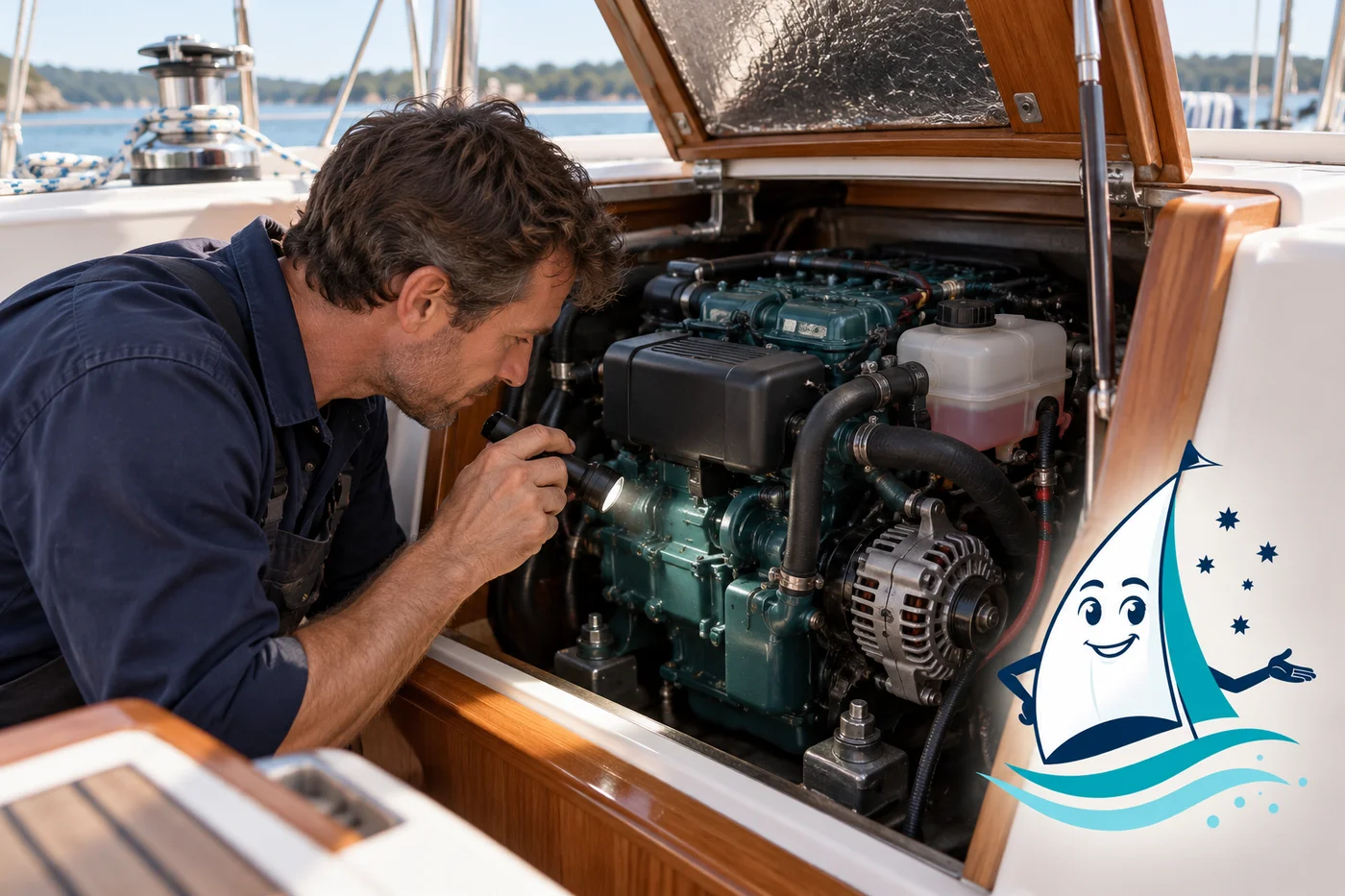
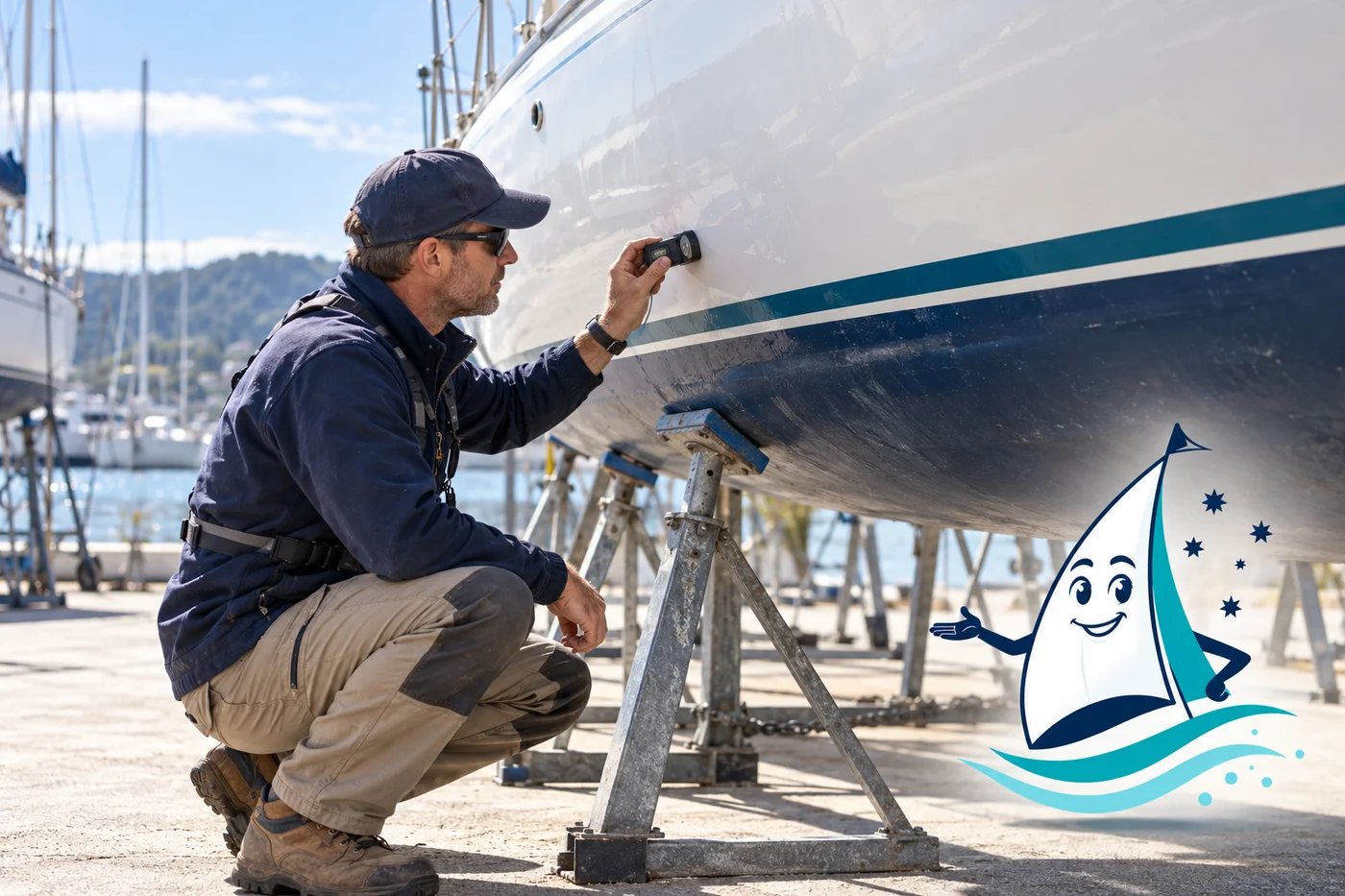
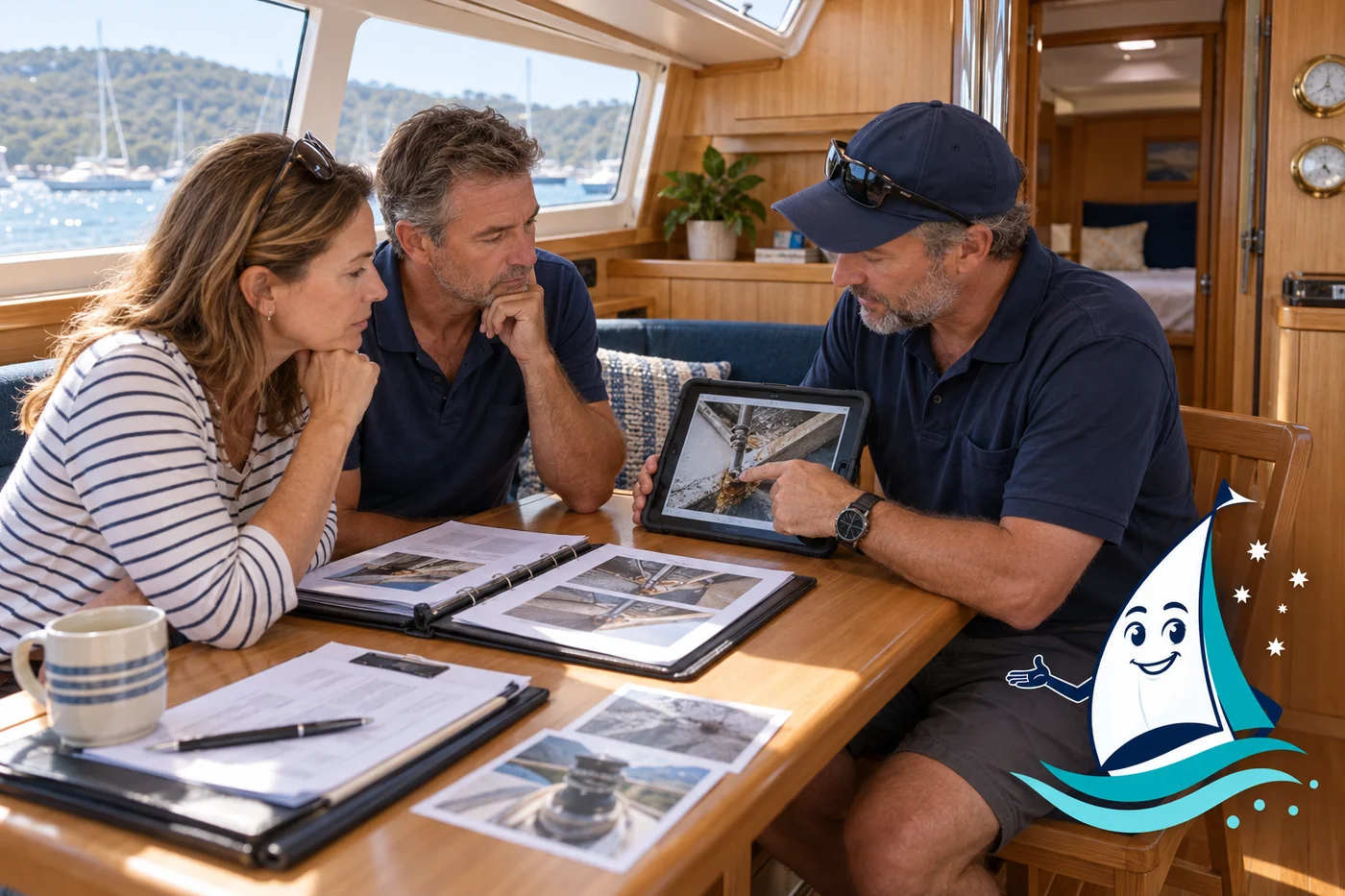
AI-generated editorial illustration with Saily. Not a photograph of a named vessel, provider or inspected installation. Three useful responses Ask for evidence when a claim is unclear. Arrange assessment when condition or repair scope is unknown. Pause commitment when necessary checks, identity or terms remain unresolved. Age, honest disclosure and a repair history are not automatic reasons to reject a yacht.
NOTICE · ASK · VERIFY
12 red flags you can work through Original illustrative scenarios, not findings about an advertised yacht or seller. A red flag is a reason to investigate, not a diagnosis or an accusation.
01 · “New rigging” — but only the ropes were replaced 02 · “Full sail wardrobe” — every sail stays in its bag 03 · The engine is already warm when you arrive 04 · Movement near a deck fitting is dismissed as cosmetic 05 · A grounding is disclosed, but there is no repair record 06 · A previous survey is offered instead of your own checks 07 · The sale must proceed before inspection access is agreed 08 · The bargain needs an engine, a berth and somewhere to work 09 · A long upgrade list has no installation records 10 · “Pay the deposit today; we can sort the conditions later” 11 · The seller’s authority or yacht identifiers do not line up 12 · The report says “not tested” where you expected reassurance Records · ILLUSTRATIVE SCENARIO
“New rigging” — but only the ropes were replaced The advert says the rigging was renewed. The invoice lists halyards and sheets, but no stays or shrouds.
Why it matters The description leaves the standing-rigging history unresolved. It does not establish a defect or a replacement date. Ask this “Which components were replaced? Can I see the itemised invoices and the last rig inspection report?” Who can help Independent rigger, with the surveyor coordinating the overall inspection brief. Your next decision Keep rig condition and replacement allowance unresolved until the relevant records and assessment are available. Read the relevant guide → Viewing · ILLUSTRATIVE SCENARIO
“Full sail wardrobe” — every sail stays in its bag Six sails are listed. Their ages are unknown, two bags have different yacht names, and none is opened during the viewing.
Why it matters The number of bags does not tell you whether the sails fit, work or suit your intended sailing. Ask this “Can we identify every sail, record dimensions and history, and arrange an appropriate sailmaker assessment?” Who can help Sailmaker; agree any safe demonstration with the owner or trial operator. Your next decision Do not price every listed sail as usable. Mark each unassessed item as unknown in the comparison tool. Read the relevant guide → Viewing · ILLUSTRATIVE SCENARIO
The engine is already warm when you arrive You agreed to observe the first start, but the engine is running at the dock. There are no service invoices to review.
Why it matters You have missed the agreed cold-start observation. That is incomplete evidence, not proof of concealed trouble. Ask this “Why was it started? Can we arrange a mechanic-led assessment and review the service history?” Who can help Marine mechanic familiar with the engine; agree trial scope with the surveyor. Your next decision Leave start-up behaviour and machinery condition unverified until the agreed checks can happen. Read the relevant guide → Viewing · ILLUSTRATIVE SCENARIO
Movement near a deck fitting is dismissed as cosmetic At the viewing you notice movement around a fitting and staining below. The explanation is simply that every older yacht does it.
Why it matters The cause and repair extent need assessment; appearance alone cannot establish whether the issue is minor. Ask this “What history or repairs relate to this exact area? Can the surveyor inspect it with suitable access?” Who can help Independent surveyor experienced with the yacht’s construction. Your next decision Record the location and stop treating the area as a cosmetic allowance until the surveyor explains the finding. Read the relevant guide → Records · ILLUSTRATIVE SCENARIO
A grounding is disclosed, but there is no repair record The owner describes a past grounding and a repair. No invoice, repair scope or subsequent assessment is available.
Why it matters Disclosure is useful; the missing repair trail is the question to resolve. Ask this “Who did the work, what was repaired, and what evidence can we give an independent surveyor?” Who can help Surveyor, with a repair specialist or designer if they identify a need. Your next decision Leave the repair outcome unresolved until a suitable assessment explains what is known and what remains inaccessible. Read the relevant guide → Survey · ILLUSTRATIVE SCENARIO
A previous survey is offered instead of your own checks A report from several years ago is described as all you need. Its purpose and exclusions are unclear.
Why it matters A previous report is background evidence. It does not answer every question about the yacht today or your intended use. Ask this “May I read the complete report, its scope and exclusions, and the records of work since then?” Who can help Your independently appointed surveyor; ask the proposed insurer what evidence it requires. Your next decision Do not mark your survey stage complete just because an old report exists. Read the relevant guide → Survey · ILLUSTRATIVE SCENARIO
The sale must proceed before inspection access is agreed You are told there is no time for haul-out or specialist checks and asked to accept the yacht based on a short viewing.
Why it matters You cannot make the planned decision with the access currently offered. Scheduling problems and refusal need to be distinguished. Ask this “What access can be arranged, when, and how will the written agreement accommodate outstanding checks?” Who can help Surveyor for inspection needs and an appropriate adviser for the actual agreement. Your next decision Pause further commitment while necessary access and the implications of the sale terms remain unresolved. Read the relevant guide → Budget · ILLUSTRATIVE SCENARIO
The bargain needs an engine, a berth and somewhere to work An illustrative yacht is advertised at A$25,000. It cannot move under its own power, and its current berth is unavailable after sale.
Why it matters The asking price leaves essential logistics and work unpriced. A low entry price is not a complete project budget. Ask this “Where will it go, who can move it, where is work permitted, and which written quotes cover the full scope?” Who can help Surveyor, mechanic, yard and an appropriate transport or delivery provider. Your next decision Do not compare it with a usable yacht until movement, storage, work and unknowns are in the budget. Read the relevant guide → Records · ILLUSTRATIVE SCENARIO
A long upgrade list has no installation records The listing highlights new batteries, a charger and wiring changes. There are no diagrams, invoices or handover documents.
Why it matters Recent equipment does not explain how the installation was designed, fitted or checked. Ask this “Who installed it? What records, specifications and commissioning information can be reviewed?” Who can help Surveyor to identify scope; appropriately qualified marine electrical specialist for detailed assessment. Your next decision Keep installation questions open. Do not attempt diagnostic work yourself during the viewing. Read the relevant guide → Purchase · ILLUSTRATIVE SCENARIO
“Pay the deposit today; we can sort the conditions later” A broker or private seller asks for payment before you have a written agreement explaining the deposit and inspection process.
Why it matters Urgency does not resolve unclear terms, who holds the money or what happens if checks are unsatisfactory. Ask this “Where are the written deposit, inspection, deadline and withdrawal terms, and who holds the funds?” Who can help Independent legal or conveyancing advice appropriate to this transaction where needed. Your next decision Do not pay merely to hold your place while material terms are unclear. Resolve the actual agreement first. Read the relevant guide → Purchase · ILLUSTRATIVE SCENARIO
The seller’s authority or yacht identifiers do not line up The advertised yacht name differs from documents, or the person taking payment cannot explain their authority to sell.
Why it matters There may be an ordinary explanation, but identity, authority and the correct identifiers are unresolved. Ask this “What links these documents to this yacht and establishes your authority to sell it?” Who can help An appropriate adviser; use official Australian search guidance for the correct yacht identifiers. Your next decision Resolve discrepancies before payment. A PPSR search alone does not establish ownership or condition. Read the relevant guide → Survey · ILLUSTRATIVE SCENARIO
The report says “not tested” where you expected reassurance You receive a survey report, but the rig aloft and machinery diagnostics were outside scope. You had assumed both were covered.
Why it matters An exclusion is a limit on the evidence, not a pass or a failure of that system. Ask this “Which unanswered questions matter for my intended use, and who can assess them before the relevant decision deadline?” Who can help Surveyor to explain limitations; rigger or mechanic for separately agreed work. Your next decision Keep excluded systems marked unassessed rather than ticking them off because the overall report arrived. Read the relevant guide → Images are generated editorial illustrations; they do not depict the described defect or prove a vessel’s condition.
Research behind the approach The examples are original teaching scenarios. BoatUS explains the value of independent surveys and separately scoped rigging and machinery work; its US prices and legal processes are not Australian guidance. For Australian watercraft searches, use the official PPSR instructions.
Research checked 6 October 2026. Agree vessel-specific conclusions and inspection scope with the relevant professional.