
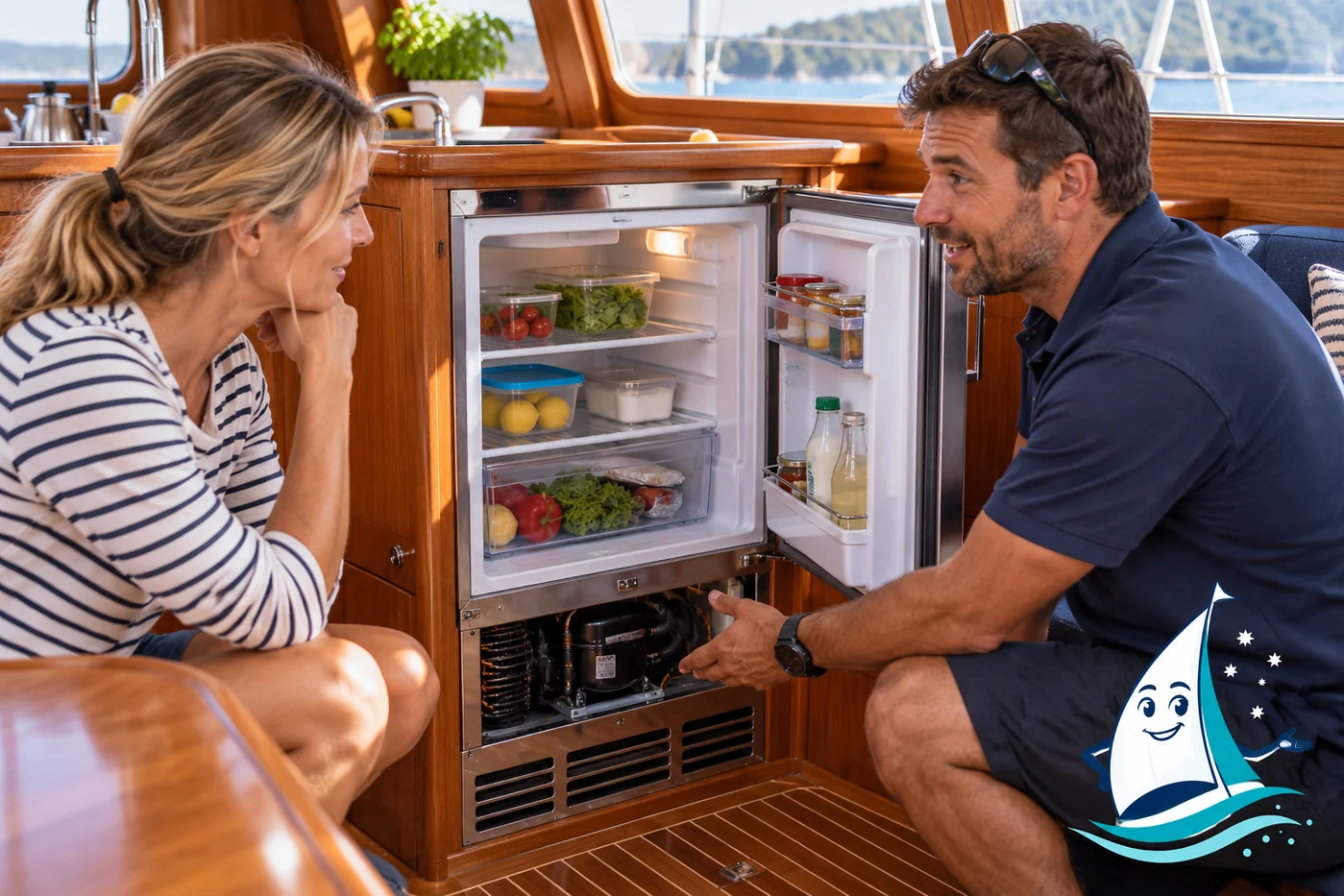
1. Define the need before the product
Record the existing fridge’s actual behaviour, daily consumption if available, usable volume, seals, ventilation and access. Describe how often you provision and whether you need a freezer. Start by understanding the existing problem rather than assuming a larger appliance is the answer.
2. Compare the credible options
Compare servicing, improving the box or installation, replacing refrigeration equipment and fitting a new complete cabinet. Ask about performance in the temperatures expected aboard. For cooking changes, scope gas and electrical work separately with appropriately qualified trades.
3. Check the complete installation
- Confirm ventilation, installation clearances and service access for the selected product.
- Review insulation, seals, drainage and condensation management with the installer.
- Include the proposed equipment in the daily electrical load and charging plan.
- Check door/lid access, securing arrangements and the removal path.
4. What the all-in quote should cover
Compare written Australian dollar quotes for the same scope. Ask whether GST is included, how long pricing is valid and what remains an estimate.
- Appliance or refrigeration package and controls.
- Box or cabinetry work, ventilation and electrical changes.
- Installation, commissioning and any refrigeration service work required.
Equipment-only pricing is not an installed-cost estimate. Record unknown costs separately and agree approval for variations before work proceeds.
5. Check the handover, not just the invoice
Agree the acceptance and commissioning evidence before work starts. Use the installer’s appropriate test procedure; this is an owner’s handover checklist, not instructions to perform technical tests yourself.
- Confirm operation and temperature performance under recorded conditions.
- Review measured consumption with the electrical plan rather than relying only on a label.
- Collect care instructions and demonstrate routine access and shutdown.
6. Budget for ongoing ownership
Maintain seals, ventilation and components as instructed. Use observations from real trips to refine the energy budget and provisioning plan.
Common buying mistakes
Do not let a cosmetic galley rebuild hide equipment that needs servicing. A larger battery may mask a problem without fixing inefficient or faulty refrigeration.
WORKED PLANNING EXAMPLE
Illustrative decision: a crew suspects insufficient battery capacity. A refrigeration technician identifies a service issue first; the crew measures consumption again before approving a battery upgrade.
THE OWNER’S FIELD GUIDE
Work through the decision in detail
Use these discussions before requesting a quote. Bring the yacht’s records, your survey findings and a clear description of the trips you want to make.
- Understand the food-storage routine before choosing equipment
- Assess the cabinet before replacing the cooling unit
- Make refrigeration part of the energy budget
- Provide the installation environment the product needs
- Compare a repair, component replacement and complete cabinet
- Check performance in a representative setting
OWNER’S FIELD GUIDE · 01
Understand the food-storage routine before choosing equipment
Describe how long you cruise between provisioning stops, the number of people aboard and whether you need chilled food, frozen food or both. Record how the existing system performs under normal use and what you find frustrating. Do not assume a larger cabinet is automatically the answer.
Consider how often the compartment is opened, how food is organised and whether the space is usable in practice. A well-matched arrangement should support the crew’s routine while fitting the yacht’s energy and service plan. Ask the supplier to explain the practical storage result as well as the advertised volume.
OWNER’S FIELD GUIDE · 02
Assess the cabinet before replacing the cooling unit
Have the existing cabinet, seals, insulation and installation arrangement assessed along with the machinery. Ask whether the proposed replacement addresses the cause of poor performance. A new cooling unit may leave an unresolved cabinet or access problem unchanged.
Document the dimensions, service routes and areas that can realistically be altered. If cabinetry work is proposed, include how the surrounding space will be restored. A professional inspection can help distinguish a service job, a component replacement and a project that genuinely requires rebuilding the installation.
OWNER’S FIELD GUIDE · 03
Make refrigeration part of the energy budget
Give the electrical specialist and refrigeration installer the same operating brief. Ask what assumptions support any consumption estimate and how actual use will be checked after installation. Weather, installation and the way the crew uses the compartment all belong in the discussion.
Coordinate with battery and charging upgrades before ordering. An energy budget based only on the appliance’s most favourable published figure can leave the yacht short of charging capacity. Compare the expected daily requirement with your complete cruising plan and a realistic response to an energy shortfall.
OWNER’S FIELD GUIDE · 04
Provide the installation environment the product needs
Ask the installer to show how ventilation, access, mounting and electrical supply will meet the selected manufacturer’s requirements. Check what happens when nearby lockers are filled with normal cruising gear. A space that works when empty may not remain suitable after provisions are loaded.
Include removal and servicing in the design review. Ask which routine tasks the owner can perform and which require a qualified refrigeration or electrical professional. Obtain the exact model details so support can identify the installed equipment without another inspection visit.
OWNER’S FIELD GUIDE · 05
Compare a repair, component replacement and complete cabinet
Request a diagnosis before treating total replacement as the only option. Compare the likely outcome, retained components, warranty and support for each credible scope. Ask for uncertainties to be stated rather than hidden inside a confident equipment recommendation.
A full quote should account for removal, access changes, electrical work, cabinetry and commissioning as applicable. Clarify whether the old equipment will be removed from the vessel and how the finished galley will look. Evaluate the complete usable result rather than the price of the cooling unit alone.
OWNER’S FIELD GUIDE · 06
Check performance in a representative setting
Agree an appropriate commissioning and observation period with the installer. Record the operating conditions and the performance measures they recommend, including useful temperature monitoring. Follow suitable food-storage guidance independently; a cold-feeling surface is not a complete assessment.
Keep a first-trip log of operation, unusual sounds, alarms or unexpected energy use. Share concerns promptly and avoid changing unfamiliar settings to chase a symptom. Obtain the manufacturer’s maintenance instructions and make the service space part of routine checks before longer trips.
MAKE A SHORTLIST
Which scope fits your yacht?
Ask the relevant specialist which of these routes is credible for your yacht. Compare the whole result, including the parts you would retain.
PAUSE AND ASK FOR EVIDENCE
Red flags in the upgrade proposal
These are reasons to clarify the scope or seek specialist assessment. They do not establish that a particular product or contractor is unsuitable.
A larger battery is offered before the fridge is assessed
More energy may conceal an unresolved refrigeration or installation problem.
Your next step: Obtain a diagnosis, then use the selected solution to update the yacht’s energy budget.
The cabinet is ignored when quoting new machinery
Insulation, seals, layout and access can influence the result.
Your next step: Ask for the cabinet and installation to be assessed alongside the cooling components.
Nearby storage obstructs the intended installation space
The unit’s required environment may not be preserved once the yacht is provisioned.
Your next step: Review ventilation and access against the manufacturer’s requirements with normal gear aboard.
Performance is judged only by touching a cold surface
That observation does not establish the agreed food-storage performance.
Your next step: Agree model-appropriate temperature monitoring and commissioning with the installer and keep useful early-use records.
ILLUSTRATIVE OWNER SCENARIO
How the decision changes in practice
A yacht’s refrigerator struggles during longer summer trips. The owner initially budgets for a larger battery bank. An inspection instead identifies that the refrigeration installation needs attention before its energy demand can be sensibly assessed. They compare a repair and cabinet improvement with a complete replacement, then update the electrical budget using the chosen scope. The two specialists work from one cruising brief.
A fictional planning example, not a report about a particular yacht, owner or contractor.
6 QUESTIONS FOR THIS TOPIC
Refrigeration & galley comfort: FAQs
Will lithium batteries fix my fridge problem?
More stored energy does not diagnose poor cooling or an unsuitable installation. Have the refrigeration problem assessed, then coordinate the energy plan for the chosen solution.
Is advertised capacity the most useful comparison?
Compare usable storage, access, installation requirements, support and expected operation in your yacht. The quoted volume alone does not describe the ownership experience.
Should I keep a freezer aboard?
Base that choice on provisioning plans, food use, available space and the complete energy budget. Ask for the consequences of chilled-only and combined arrangements to be made explicit.
What should be demonstrated at handover?
Agree model-appropriate checks with the installer, obtain operating and maintenance instructions, and record the conditions under which performance was observed.
How do I compare fridge estimates made under different conditions?
Ask each supplier to state the assumptions behind their estimate and how they relate to your yacht and intended use. Compare equivalent storage and operating needs. Do not rank products by consumption figures that describe different conditions or installation arrangements.
Should I upgrade refrigeration before planning the battery bank?
Coordinate the decisions so the electrical design uses a credible demand for the selected refrigeration arrangement. Investigate poor cooling first rather than assuming more battery capacity is the solution. Both specialists should work from the same cruising and provisioning brief.
Manufacturer reference
Dometic: product support and manuals ↗
Consult the current manual for the exact chosen model. This reference illustrates the planning issues; it is not a brand endorsement or confirmation of Australian compliance. Research checked 6 October 2026.
YOUR INSTALLER BRIEF
Prepare your refrigeration & galley comfort enquiry
Saved only in this browser. Print a copy before clearing browser data. These notes stay with this equipment guide on this device; nothing is sent to a contractor.
Plan the connected systems
Lithium house batteries
Plan the battery, charging, protection and monitoring as one electrical system.
Solar panels & charging
Match collection, control and charging opportunities to your daily load.
Inverter, shore power & AC appliances
Decide which appliances are worth the energy and installation changes.