

Prepare and start at the dock
Bring the listing, your questions, a torch and a notebook. Agree photography, access and demonstrations beforehand. Look at boarding, freeboard, cockpit access and the practical route for your crew and supplies. Confirm the actual dimensions. Ask permission before opening lockers or operating equipment, and let a competent person demonstrate unfamiliar systems.
Walk the deck and accessible rig
Work bow to stern. Observe fittings, hatches, visible repairs and unusual movement. Look at accessible chainplate areas and ask about water below deck penetrations. Note what deserves attention from a surveyor or rigger; do not diagnose concealed structure by feel or appearance alone. Do not climb the mast, loosen rigging or undertake destructive tests during a viewing.
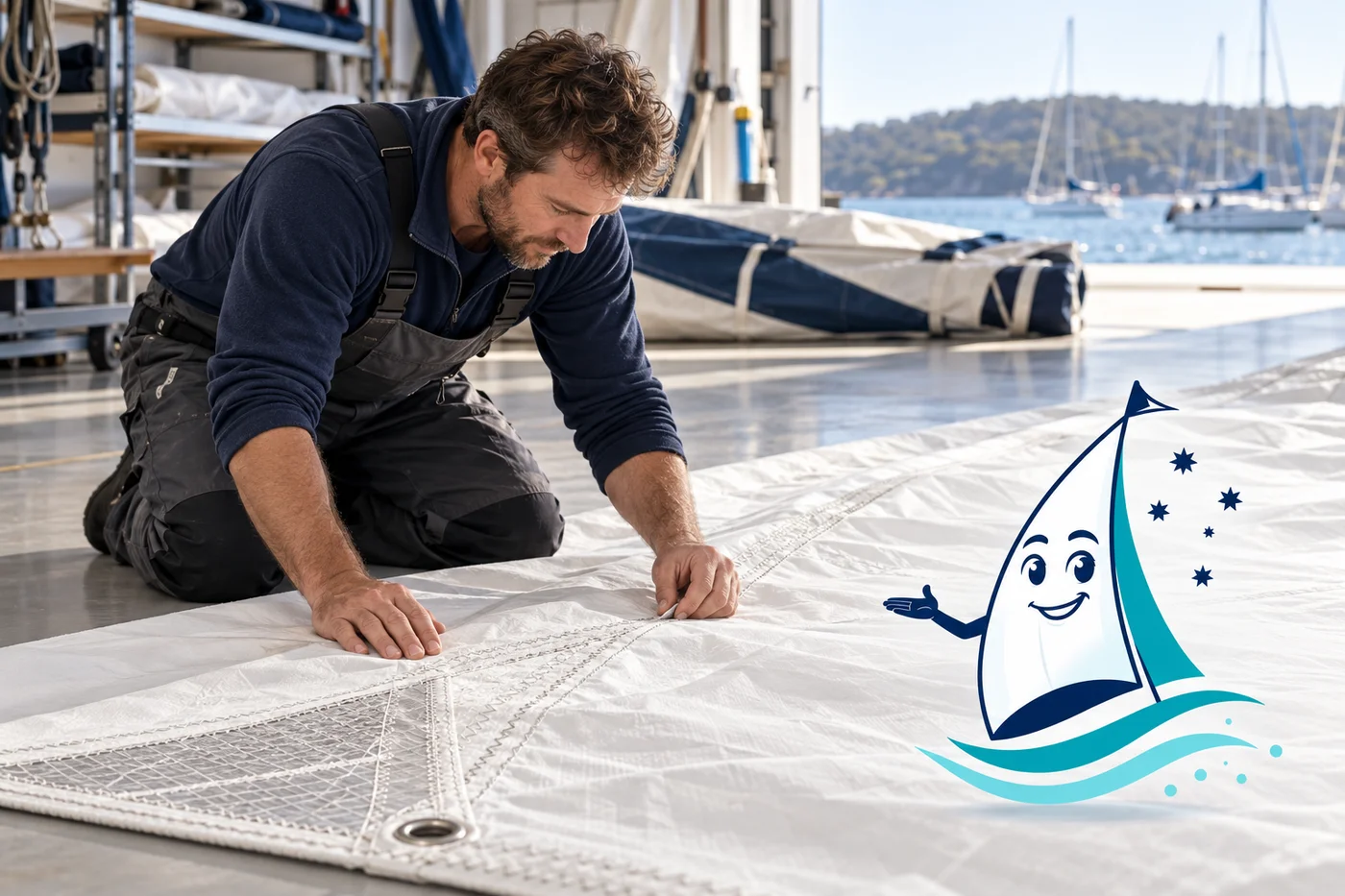
Make each sail earn its place in the inventory
Ask to see the included sails in suitable conditions or arrange a loft assessment. Record maker, age evidence, repairs, storage and use for each one. Ask about cloth, stitching, UV covers, attachments and shape. If a sail cannot be shown, mark it uninspected. Check that the working sail plan and reefing arrangements are manageable for your regular crew.
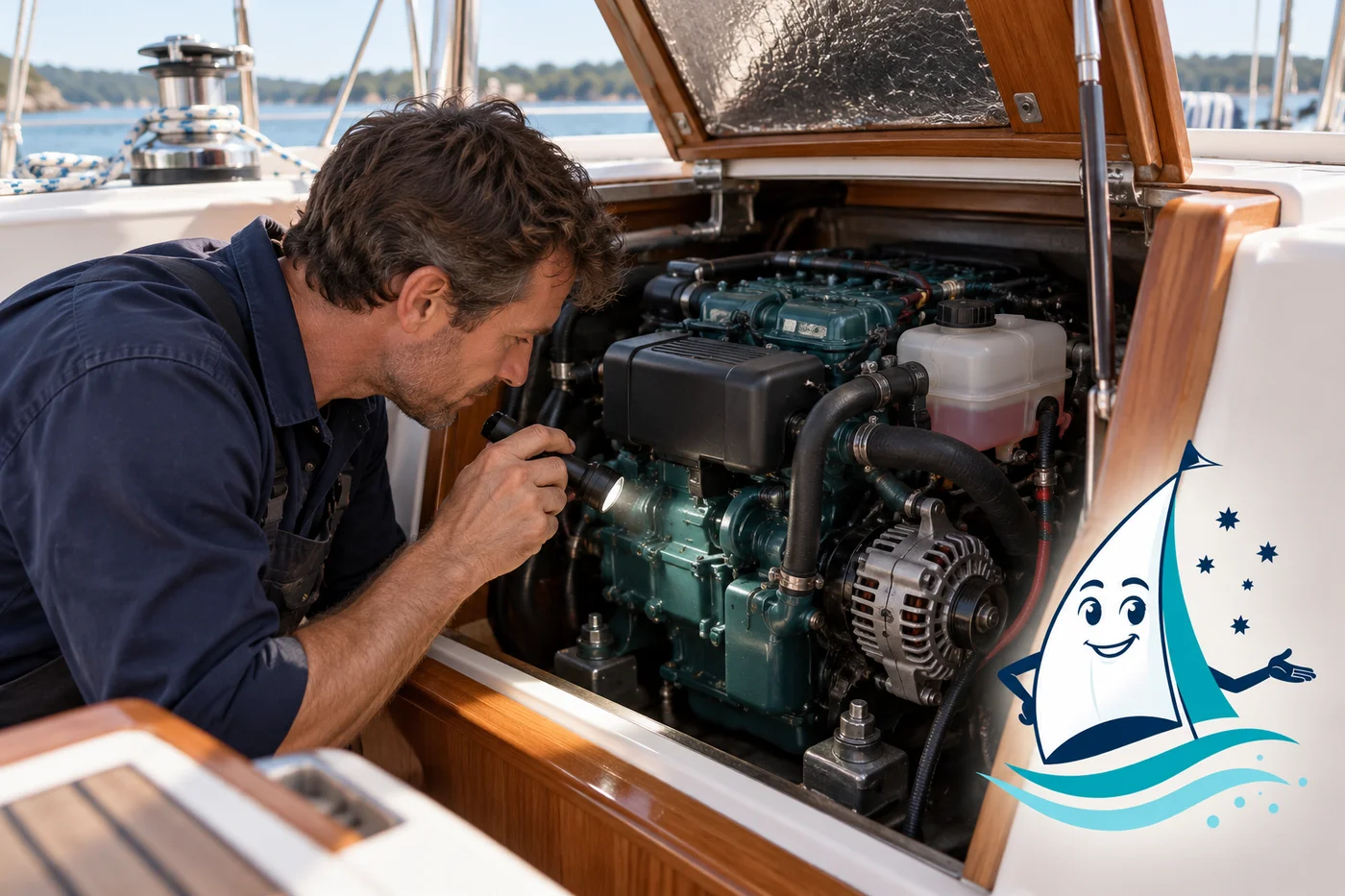
Look beyond a tidy engine compartment
Identify the engine and displayed hours, then compare them with records. Ask about service access, cooling, exhaust and the drive system. Arrange the opportunity for a cold start with a competent operator; leave diagnostic work to a marine mechanic. A brief run at the dock does not substitute for suitable loaded operation during a planned trial.
Look beneath the interior presentation
With permission, view accessible bilges, lockers, bulkheads and service spaces. Record staining, odours, leaks and areas that cannot be reached without further access. Ask what is known and what has been investigated. Try the accommodation and movement aboard, but keep comfort impressions separate from structural or electrical conclusions that need professional assessment.
Close the visit with a decision
Review the outstanding questions before leaving and confirm which records or demonstrations will follow. Avoid making an offer simply because the owner has been generous with time. Decide whether the yacht still fits the brief and whether the professional checks are worth commissioning. If you proceed, organise the next stage under terms you understand.
NOTICE · ASK · VERIFY
What a red flag looks like in practice
Original illustrative scenarios, not findings about an advertised yacht or seller. A red flag is a reason to investigate, not a diagnosis or an accusation.

Viewing · ILLUSTRATIVE SCENARIO
“Full sail wardrobe” — every sail stays in its bag
Six sails are listed. Their ages are unknown, two bags have different yacht names, and none is opened during the viewing.
- Why it matters
- The number of bags does not tell you whether the sails fit, work or suit your intended sailing.
- Ask this
- “Can we identify every sail, record dimensions and history, and arrange an appropriate sailmaker assessment?”
- Who can help
- Sailmaker; agree any safe demonstration with the owner or trial operator.
- Your next decision
- Do not price every listed sail as usable. Mark each unassessed item as unknown in the comparison tool.
Viewing · ILLUSTRATIVE SCENARIO
The engine is already warm when you arrive
You agreed to observe the first start, but the engine is running at the dock. There are no service invoices to review.
- Why it matters
- You have missed the agreed cold-start observation. That is incomplete evidence, not proof of concealed trouble.
- Ask this
- “Why was it started? Can we arrange a mechanic-led assessment and review the service history?”
- Who can help
- Marine mechanic familiar with the engine; agree trial scope with the surveyor.
- Your next decision
- Leave start-up behaviour and machinery condition unverified until the agreed checks can happen.
Viewing · ILLUSTRATIVE SCENARIO
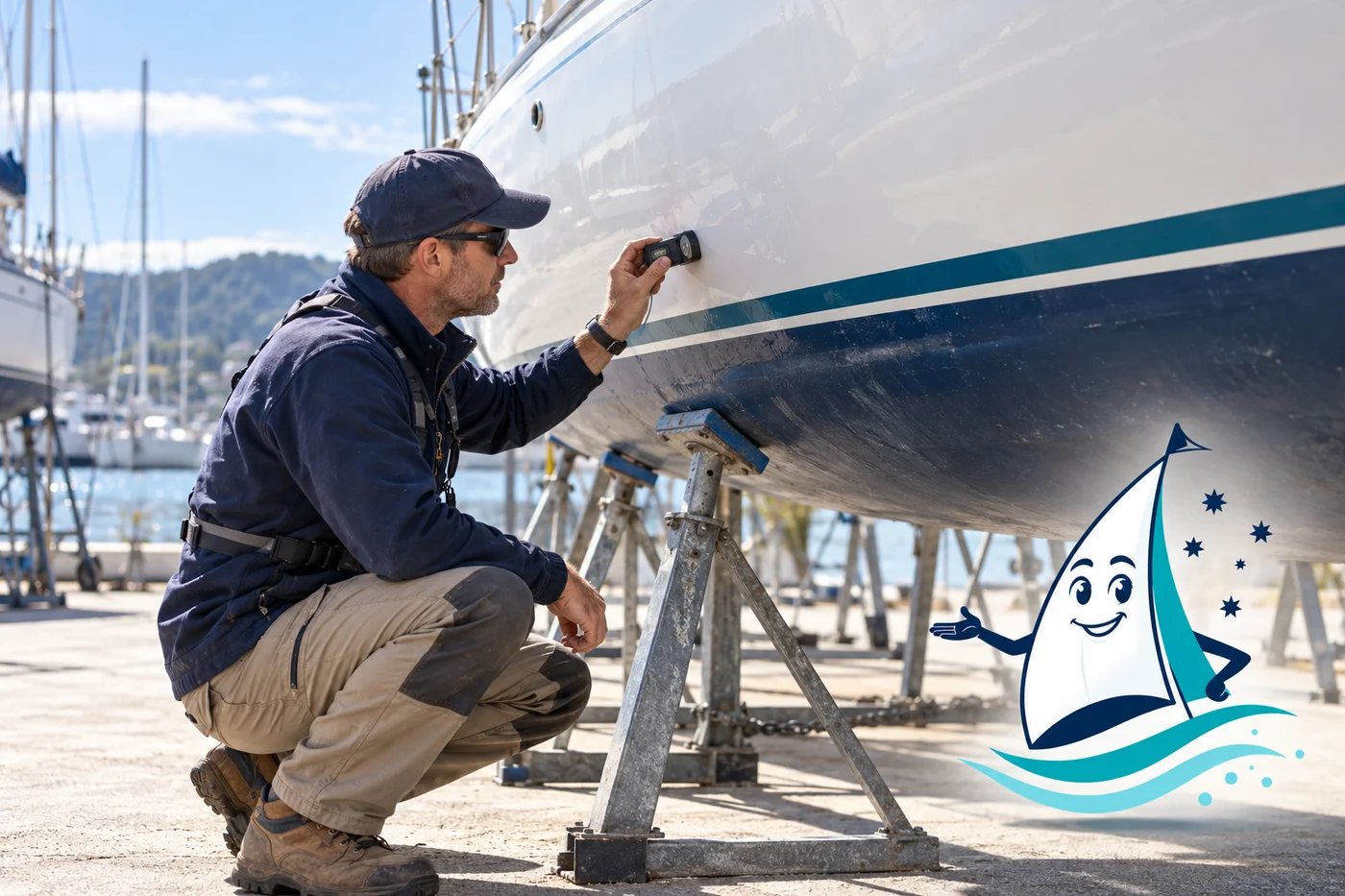
Movement near a deck fitting is dismissed as cosmetic
At the viewing you notice movement around a fitting and staining below. The explanation is simply that every older yacht does it.
- Why it matters
- The cause and repair extent need assessment; appearance alone cannot establish whether the issue is minor.
- Ask this
- “What history or repairs relate to this exact area? Can the surveyor inspect it with suitable access?”
- Who can help
- Independent surveyor experienced with the yacht’s construction.
- Your next decision
- Record the location and stop treating the area as a cosmetic allowance until the surveyor explains the finding.
Images are generated editorial illustrations; they do not depict the described defect or prove a vessel’s condition.
WORK THROUGH THE DECISION
A viewing record another person can use
During a viewing, the owner explains that a cabin window once leaked and has been resealed. The buyer sees staining but cannot view the concealed structure. Their note records three separate facts: observed staining, the owner’s explanation and the access limitation. With permission, they take a location photograph and ask for the repair record.
The same discipline applies to the engine and sails. A warm engine at arrival is recorded as a missed cold-start opportunity. Sails that remain in bags are listed as uninspected. These notes form the professional inspection brief. Meanwhile, the buyer tests practical suitability: boarding, movement, service access and the regular crew’s working positions. If the yacht fails those needs, they can stop without pretending to diagnose every technical issue.
Illustrative scenario, not an assessment of a listed yacht.
The decisions that matter here
| Decision | Evidence you need | What to do next |
|---|---|---|
| Is the yacht fundamentally suitable? | Crew access, layout and handling observations. | Reject a mismatch before commissioning a full survey. |
| What did you actually establish? | Observed, reported and not-checked notes. | Keep these labels in the survey brief. |
| What remains expensive or uncertain? | Locations, records and demonstrations still required. | Assign each question to a surveyor, mechanic, rigger or sailmaker. |
AVOID THE COMMON TRAPS
What can derail this stage
- Writing “engine good” after hearing it idle briefly.
- Letting a large sail inventory stand in for seeing the sails.
- Counting fresh upholstery as evidence about hidden structure.
YOUR PRACTICAL OUTPUT
What to put in your notebook
- A dated viewing record and photographs taken with permission.
- A list of inaccessible areas and equipment not demonstrated.
- A specialist brief covering the findings that could change the purchase.
6 QUESTIONS FOR THIS TOPIC
Inspect the yacht: FAQs
What is the purpose of my viewing if I will hire a surveyor later?
Decide whether the yacht fits your crew and whether further investigation is worthwhile. Record observations and unanswered questions for the professional brief. Your viewing can narrow the decision without pretending to replace a technical condition assessment.
Who should come with me to inspect a shortlisted yacht?
Include the person who will regularly sail with you when practical, and consider a relevant professional where a known concern needs specialist attention. Agree attendance with the seller. Give everyone a role so the visit produces useful observations rather than competing impressions.
Can I operate equipment during the viewing?
Agree demonstrations and who will operate the yacht beforehand. Ask permission before opening areas or handling equipment. Leave diagnostic tests and dismantling to the appropriate professional rather than assuming a viewing gives permission to experiment.
How do I compare two viewings fairly?
Use the same headings for suitability, records, observed condition, access limitations and follow-up work. Record the conditions of each visit. A tidy yacht with complete access should not be compared uncritically with one whose important areas were never seen.
What should I do immediately after leaving the yacht?
Write a concise record while details are fresh, organise permitted photographs and list the evidence still needed. Separate reasons to continue from reasons to stop. Send specific follow-up questions rather than a vague request for more information.
Does a pleasant demonstration sail mean I can skip a pre-purchase trial?
A demonstration may help establish suitability, but ask the appointed professionals what trial or assessment their scope requires. Record which questions were actually answered. Enjoying the sail does not verify machinery, structure or every onboard system.

YOUR INDEPENDENT EYES BEFORE YOU BUY
Bring your questions to your surveyor.
A viewing helps you shortlist. An independent pre-purchase survey helps you understand condition, significant findings and what still needs investigation. Appoint a surveyor whose experience fits the yacht and agree the scope before booking.
Understand offer, deposit and inspection conditions before committing. A survey has an agreed scope and limitations; it is not a guarantee of every system.
BEFORE YOU MOVE ON
Your section checkpoint
- The layout and handling arrangements suit your crew.
- You have a written list of untested equipment and inaccessible areas.
- The yacht still justifies the cost of professional assessment.
Pause if: fundamental suitability has failed or a significant concern cannot be investigated through reasonable access.
Write down your evidence and outstanding questions →THE DETAIL BEHIND EACH DECISION
Read the deeper chapters
Your first yacht viewing, from dock to bilge
Follow a repeatable route, take useful notes and decide whether to invest in professional inspection.
Read chapter →Hull, deck, keel and rudder
Use visible observations to brief a surveyor experienced with the yacht’s construction. Know which questions require the yacht out of the water.
Read chapter →Sails: age, shape and the replacement question
Learn what sail age tells you, what it cannot tell you, and how to get a useful sailmaker assessment before budgeting for a new wardrobe.
Read chapter →Mast and rigging: what was actually replaced?
Separate wire replacement, running rigging, mast work and inspections. Build an evidence trail for the whole rig.
Read chapter →The auxiliary diesel: history, cold start and loaded trial
Engine hours are one piece of evidence. Review the installation, service history and propulsion system with a marine mechanic.
Read chapter →Build a complete yacht equipment inventory
Connect the specialist chapters with one record of what is installed, included and actually demonstrated.
Read chapter →Buying a used sailing catamaran
Compare a sailing catamaran’s width, payload, systems and inspection access before judging it by accommodation or nominal length.
Read chapter →YOUR AUSTRALIAN SUPPORT CREW
Find the right help on YouSail.
Start with the job you need done, then discuss experience, scope and availability directly.
INDEPENDENT PRE-PURCHASE ASSESSMENT
Marine surveyors ↗Commission an independent assessment.
Explore the YouSail directory →Assess the sail wardrobe and price repairs or replacement.
Explore the YouSail directory →Discuss machinery assessment and service scope.
Explore the YouSail directory →Directory links checked 6 October 2026. Listings are starting points for enquiries, not endorsements or confirmation of current qualifications, services or availability. Choose and appoint your own independent professionals.